Disclosure: this article contains an affiliate link. If you buy through it, we may earn a commission.
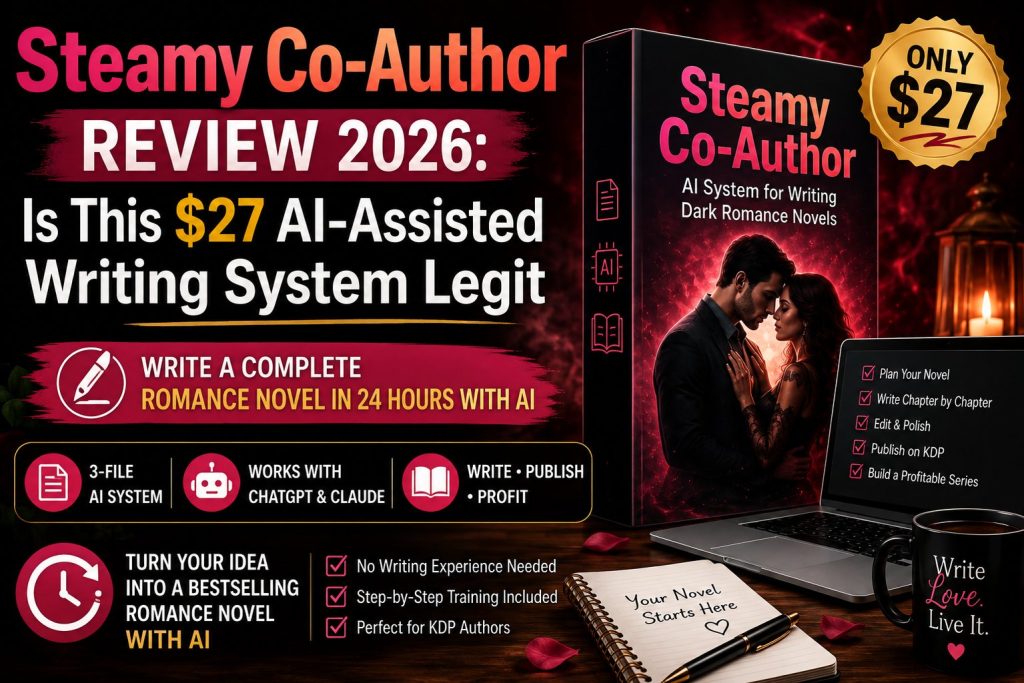
Steamy co-author is a digital writing system designed to help users generate full-length romance novels by using a specific three-file framework that interacts with artificial intelligence tools like claude and chatgpt. It provides a structured process where the user answers fifteen guided questions to produce content chapter by chapter, with the stated goal of creating books that are ready for publishing on platforms like amazon kindle direct publishing.
How Steamy Co-Author Works
The steamy co-author approach shifts the focus from traditional creative writing to a systematic, prompt-driven workflow. Instead of staring at a blank page, you follow a pre-defined set of instructions that direct the AI to produce narrative content based on your initial input. The system relies on three specific files that serve as the foundation for your manuscript, ensuring that the AI maintains continuity and stays focused on the plot points you define.
Most users fail by feeding the system vague character traits. If your input is “mysterious billionaire,” the AI will default to generic tropes. Instead, provide three concrete secrets the character hides from their partner. This specificity forces the model to generate unique conflict rather than recycled dialogue.
If you’re writing a standalone novel, use the system to outline the entire arc before generating prose. If you’re writing a series, use the files to lock in recurring locations and side characters. This prevents the “hallucination” where the AI forgets a character’s eye color or past trauma by chapter three. By using this method, the goal is to reduce the time spent on drafting and editing. It’s built specifically for the dark romance genre.
Key Features Of The Workflow
The utility of this tool comes from its rigid structure rather than its ability to write without human input. You still provide the creative spark, but the framework governs how that spark becomes a finished chapter.
The Three-File Framework
The core of the system is a trio of files that manage your project. In practice, this means you aren’t just sending random prompts to an ai chatbot. Instead, you’re feeding specific data into these files, which then act as a roadmap for the ai. This prevents the tendency of ai models to wander off-topic or forget character names and settings halfway through a story.
The Fifteen-Question Process
Rather than trying to write a whole book at once, you answer fifteen questions that act as the skeleton for your novel. These questions likely cover character motivations, conflict points, and key plot beats. For a user, this means you can build a book piece by piece without feeling overwhelmed. It turns the daunting task of writing a novel into a series of smaller, manageable tasks.
Genre-Specific Formatting
The tool is built for the dark romance market. This means the prompts and structures are likely tuned to the pacing, tropes, and tone that readers in this specific genre expect. If you’re writing in a different category, you might find the system less effective, as the “rules” of the ai are optimized for romance conventions rather than broad creative writing.
Is This System Right For You?
Deciding whether to use this tool depends on your goals as a creator. If your main objective is to establish a presence on kdp with a high volume of romance titles, the system provides a repeatable path to getting those books finished. It’s built for people who want to produce series, as the structure allows you to carry character arcs and themes from one book into the next.
However, you should consider the limitations of working with ai. While the system helps avoid common errors, the final product still requires your oversight. You’re the one choosing the direction of the plot. If you’re a writer who enjoys the deep, slow process of crafting every sentence by hand, you might find this system restrictive. It’s designed to prioritize speed and volume over the traditional artistic process.
Before buying, verify that you have access to the ai platforms mentioned, such as chatgpt or claude, as the tool functions as an interface or guide for those services rather than a standalone writing software. You should also ensure that your expectations align with the goal of producing commercial genre fiction, as the system is specifically marketed for that purpose.
How Does It Compare To Manual Writing?
The primary trade-off when using this system is between efficiency and creative control. A manual writer spends weeks or months outlining, drafting, and refining. A user of this system aims to compress that timeline significantly.
| Feature | Manual Writing | Steamy Co-Author |
|---|---|---|
| Drafting Time | Weeks to Months | Days |
| Plot Consistency | Human-managed | AI-structured |
| Creative Effort | High throughout | High at the start |
| Genre Focus | Any genre | Dark romance |
The manual approach allows for complete creative freedom, meaning you can write in any style or voice you choose. The ai-based system requires you to work within the confines of the fifteen-question framework. While this makes the process faster, you’re sacrificing the ability to veer off the path in experimental ways.
Common Obstacles With AI-Assisted Writing
Even with a structured system, you’ll face certain challenges. The most common mistake users make is assuming the ai will handle everything perfectly without human review. Even with a system designed to reduce plot holes, you must still read and verify the output. If you treat the ai as a “set it and forget it” machine, you risk publishing content that feels generic or lacks the human touch that readers value.
Another hurdle is the learning curve of the prompts. While the fifteen questions provide the structure, the way you phrase your answers will dictate the quality of the prose. You need to be clear and descriptive when answering the questions to ensure the ai has enough detail to work with. If your input is thin, the output will likely be thin as well.
How do I maintain my own voice?
Your voice comes from the answers you provide to the fifteen questions. If you’re specific about character traits, tone, and dialogue styles in your initial input, the ai will have a better baseline to emulate your preferences. You can also edit the generated text to inject more of your personal style before finalizing the chapters.
Does this system replace the need for an editor?
No, it does not. While the system is designed to reduce errors, ai-generated text often requires a human to check for pacing, emotional resonance, and flow. Professional editing or at least a thorough self-edit is still necessary to ensure the book is of high quality and ready for the market.
Can I use this for non-romance genres?
The system is optimized for dark romance. While you might be able to adapt the framework for other genres, you would likely need to adjust the questions and the way you interact with the ai significantly. The tropes, pacing, and conflict structures of other genres are different enough that the system’s built-in logic may not apply.
What happens if the AI produces repetitive text?
Repetition is a common trait in many ai language models. If you notice this happening, you can adjust your prompts or the specific answers you provide to the system. Sometimes simply asking the ai to rewrite a section with a different focus or tone is enough to break the cycle of repetition.
How do I handle the copyright of AI-generated content?
The legal status of ai-generated content is complex and varies by jurisdiction. In the united states, the u.s. copyright office generally maintains that works created entirely by ai without significant human creative input aren’t eligible for copyright protection. You should ensure that you’re providing enough original creative input to your book to claim authorship.
Frequently Asked Questions
Does this system guarantee my book will sell?
No, the system provides a process for writing and publishing, but it can’t guarantee sales. Success on platforms like amazon depends on many factors, including your cover design, book description, marketing efforts, and the quality of the content you produce. The system is a tool, not a promise of income.
Do I need a subscription to ChatGPT or Claude to use this?
Yes, the system is designed to work with these ai tools. You’ll need an account with one of these services to generate the text. Check the requirements of the system to see if the free versions of these tools are sufficient or if you need a paid subscription for better performance.
Can I write at my own pace?
Yes, you can move through the fifteen questions and the three-file system at whatever speed suits your schedule. While the marketing mentions writing a trilogy in a short time, you aren’t forced to meet that pace. You can take as long as you need to complete each chapter.
Is this for beginners or experienced authors?
It’s designed for anyone, regardless of writing experience. Because the system provides a structured roadmap, someone who has never written a book can follow the steps to complete a manuscript. Experienced authors might also use it to speed up their drafting process for high-volume series.
What is the biggest risk when using this?
The biggest risk is relying too heavily on the ai and failing to provide enough unique, creative input. If you don’t guide the ai effectively, the resulting book may feel generic. Always remember that you’re the author, and your creative decisions are what make the book worth reading.
Conclusion
If you’re interested in streamlining your writing process and want to explore a structured approach to creating genre fiction, steamy co-author is worth a look. Start by reviewing the requirements and ensuring you’re comfortable working with ai tools to manage your draft, then dedicate time to answering the fifteen questions thoroughly to get the best possible results.