
Disclosure: this article contains an affiliate link. If you buy through it, we may earn a commission.
A steamy co-author review helps you decide if this specific three-file AI system fits your goals for building a digital book series. It’s a set of tools designed to help users generate full-length romance novels by interacting with artificial intelligence models like Claude and ChatGPT. The system focuses on turning a single idea into a finished book, aiming to remove the need for traditional writing experience.
How the steamy co-author system functions
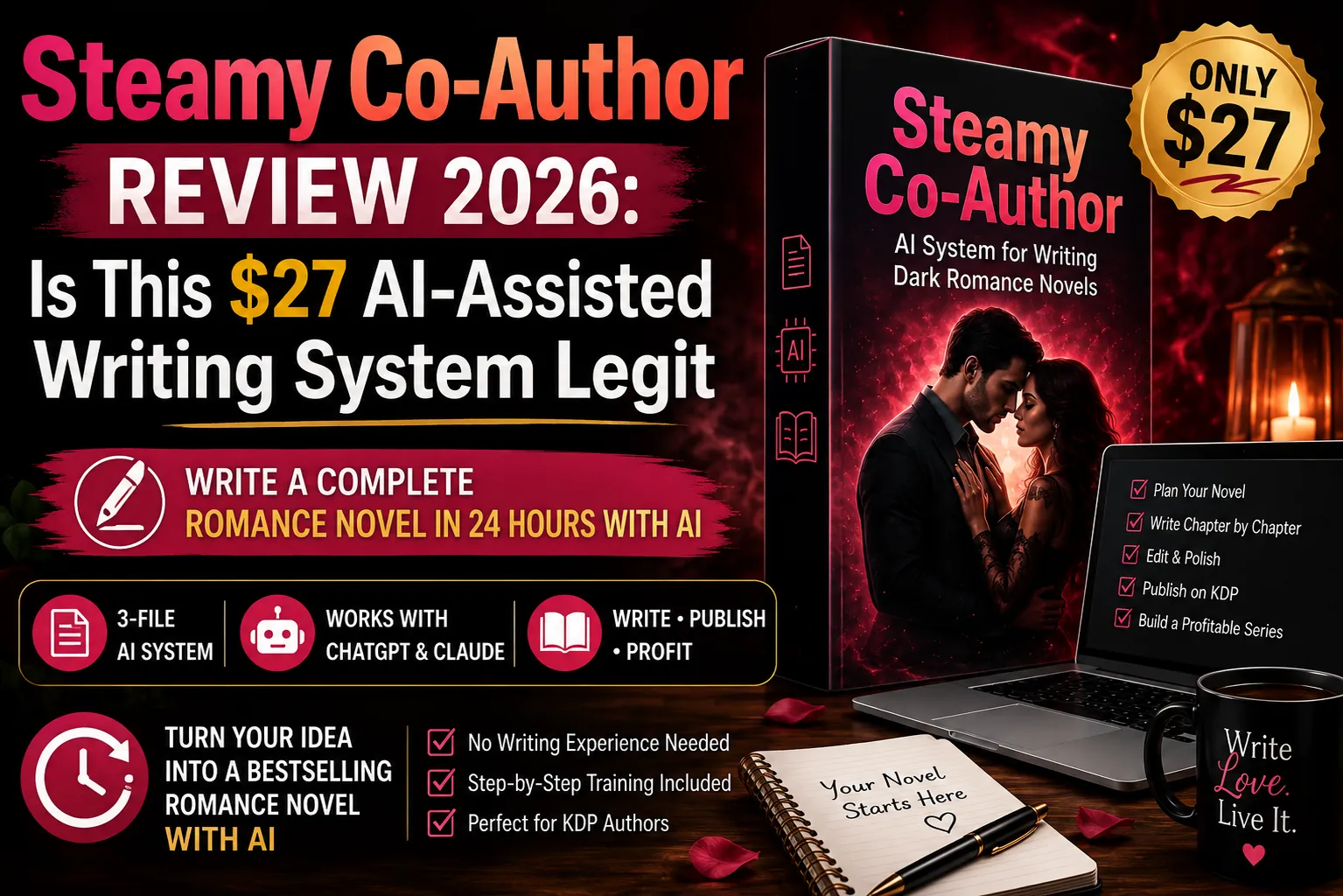
The core of the system is a three-file structure that guides an AI to write a book chapter by chapter. Instead of asking a model to write an entire story at once, which often leads to inconsistent tone or plot holes, you use these files to manage the narrative. The process relies on answering fifteen specific questions that build the foundation of your story before the writing begins.
By providing these details, you give the AI a framework to follow. This is intended to keep the story on track and ensure the content matches the romance genre requirements. It’s a method for people who want to produce content for platforms like Kindle Direct Publishing but might not have the time or the background to write from scratch.
The three-file structure
The system uses three separate files to control the AI output. These files serve different roles: * File One: Handles the initial brainstorming and setup of the book idea. * File Two: Manages the character profiles and specific plot points required for the series. * File Three: Acts as the bridge that connects your prompts to the AI, ensuring the generated chapters remain consistent with the previous sections.
When you use these files, you aren’t writing every word yourself. You’re acting as the director of the project, feeding information into the AI to get the result you want. This separation of tasks is how the system avoids common issues like “AI slop” or losing the thread of the plot halfway through a story.
The role of the fifteen questions
The fifteen questions are the engine of the entire process. You answer them to define the tone, the character dynamics, and the conflict of your romance series. Because the AI relies on these answers to generate text, the quality of your input directly affects the quality of the final book.
This stage is the most important part of the work. If you provide vague answers, the resulting chapters will likely be generic. If you provide specific details about the setting and the tension between characters, the AI has more material to work with, which helps it produce a more readable draft.
Who is this for and who should avoid it?

This system is built for people who want to build a series of books for income purposes but don’t necessarily identify as professional writers. It’s for those who are interested in the romance genre and want to use AI tools to speed up their production process. If you have an idea for a series but lack the technical knowledge to structure a full-length book, this system provides a template that you can follow.
However, this isn’t for someone who wants to write a literary novel with a unique, personal voice. The system is designed to produce stories that fit the expectations of the romance genre, where readers look for specific tropes and consistent pacing. If you’re looking for a tool that writes a book without any input from you, this isn’t that. You still have to answer the fifteen questions and manage the process.
What to check before you start
Before you commit to using this system, you should confirm a few things about your own readiness: * Time Commitment: Even if it’s faster than writing from scratch, you still need time to answer the questions and review the output. * Platform Knowledge: The system is built for KDP, so you should be familiar with the basics of uploading a file to that platform. * AI Model Access: You need an active account with Claude or ChatGPT to run the files. * Editing Requirements: While the system aims to reduce plot holes, you should plan for a round of manual editing to polish the final text before publishing.
Key features and real-world application
The primary feature of this system is its ability to maintain consistency across a series. In the world of digital publishing, readers often look for books that feel like they belong together. By using the same three-file structure for every book, you can ensure that the tone and style remain the same from the first book to the third.
Another feature is the focus on the romance genre. Romance readers have clear expectations, and this system is geared toward meeting those. It helps you keep the focus on the relationship development and the conflict, which are the two most important elements for a successful romance title.
Managing the output
When you use AI for creative tasks, the result can sometimes wander. This system attempts to solve that by making the process modular. You aren’t asking the AI to “write a book.” You’re asking the AI to “write chapter four based on the character profiles in file two and the plot points in file three.” This reduces the chance of the AI forgetting what happened in the previous chapter.
Related guides
Frequently Asked Questions
Does this system work with any AI model?
The system is built to work with Claude and ChatGPT. You’ll need an account for one of these models to input the files and questions. It’s designed to take advantage of their ability to follow instructions when given a specific structure.
Do I need to be a professional writer to use this?
No, the system is designed for people who don’t have writing experience. It provides the structure and the prompts, so you act more as a manager of the AI. However, you should still be willing to proofread and edit the final text before you publish it.
Can this system write a whole series?
Yes, the system is intended to build series. Because you use the same structure for each book, you can produce multiple titles that follow a similar format. This is helpful if you want to create a trilogy or a longer series for your readers.
Will the AI write the book perfectly the first time?
The system helps avoid common AI errors like plot holes or drifting tone, but it isn’t a replacement for human judgment. You should expect to review the chapters and make small adjustments. The goal is to speed up the process, not to remove the need for a final check.
Is this system just for romance novels?
The system is built for the romance genre, which relies on specific tropes and character arcs. While the file structure might be adaptable, it’s specifically optimized for romance stories. Using it for a different genre might require significant changes to how you answer the fifteen questions.
What is the biggest mistake users make?
The biggest mistake is rushing the fifteen questions. If you don’t provide enough detail in the initial setup, the AI won’t have enough information to create a compelling story. Take your time to answer those questions thoroughly to get the best result from the system.
Conclusion
Choosing to use a structured approach for your writing can change how you view digital publishing. If you’re interested in creating a series and want a framework that handles the heavy lifting of plot and character consistency, Steamy Co-Author provides the tools to get you started. Focus on your story ideas, answer the setup questions with detail, and keep your publishing goals clear as you begin your first draft.