Disclosure: this article contains an affiliate link. If you buy through it, we may earn a commission.
This honest Home Service Agency Studio Review breaks down a WordPress toolkit designed to help freelancers build and sell turnkey websites to local contractors without writing code or building layouts from scratch. Home Service Agency Studio combines pre-built layouts, industry-specific text, and prospect demonstration tools inside a single dashboard.
What Is Home Service Agency Studio?
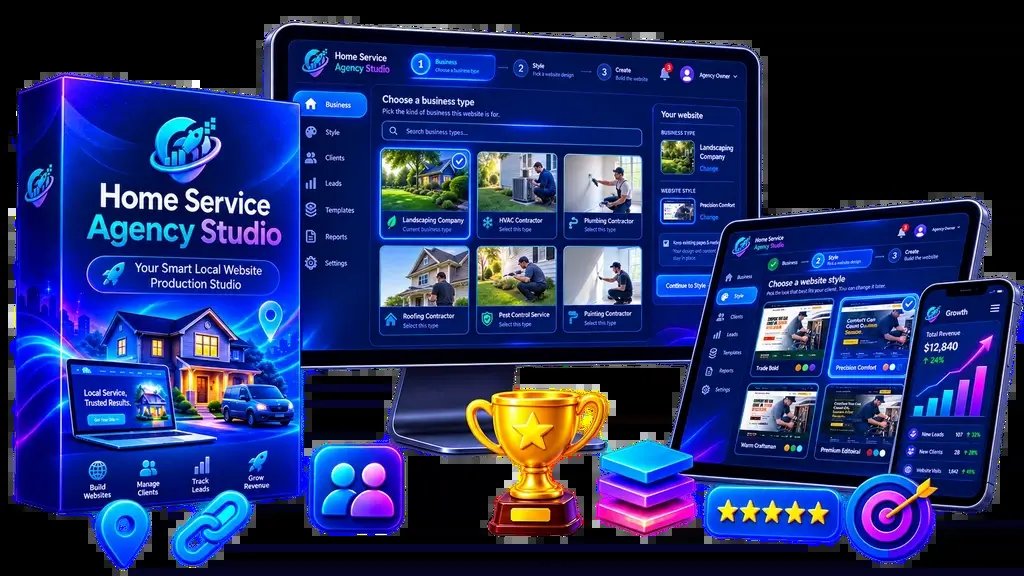
Home Service Agency Studio is a specialized WordPress system built to streamline the entire production workflow of local business web design. It operates directly inside WordPress, turning an installation into an active production and delivery studio rather than requiring external web design software. The system tackles three primary bottlenecks that keep freelancers from closing local deals: assembling credible layouts, writing industry-accurate service copy, and presenting live prototypes to prospective buyers.
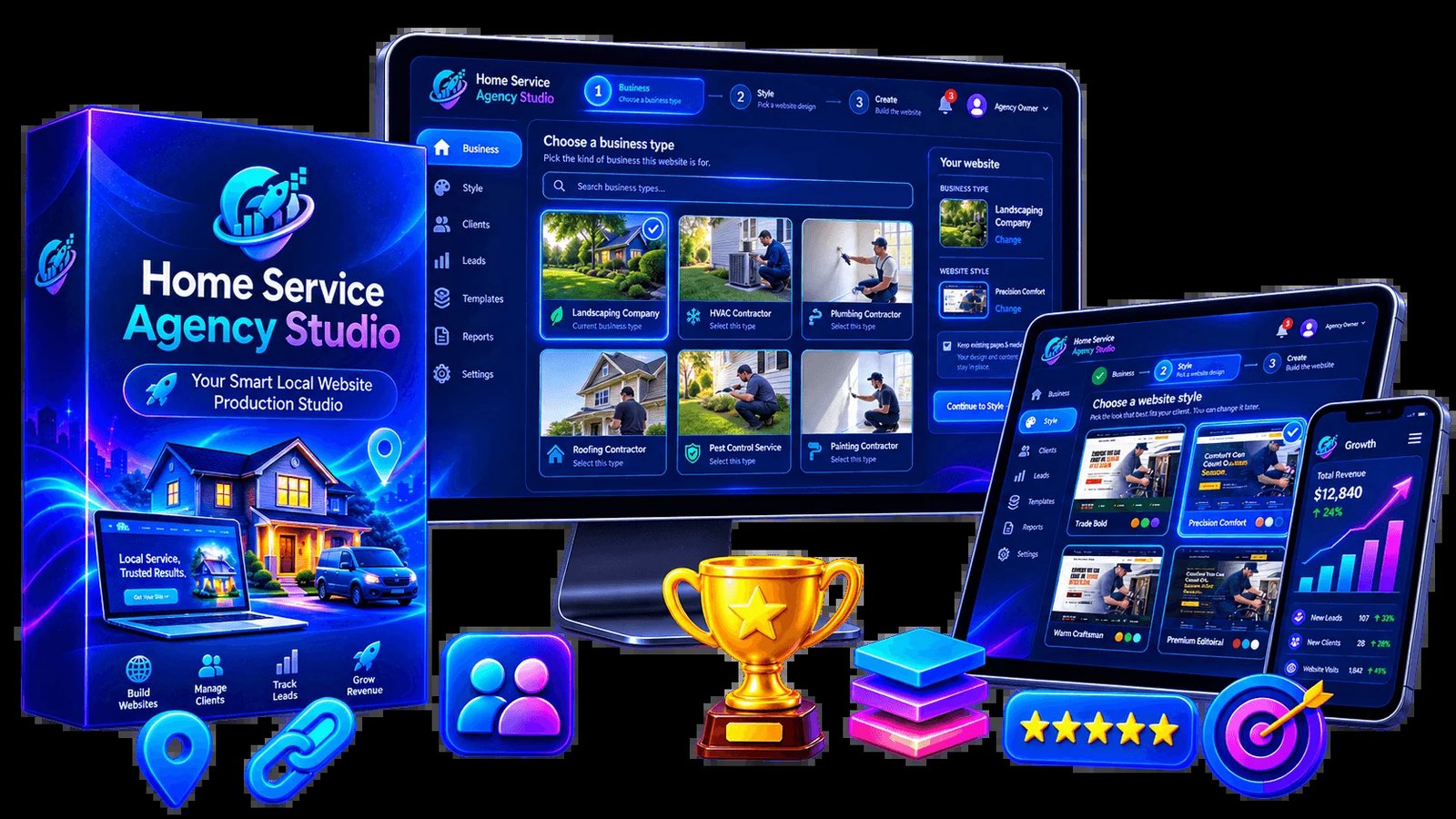
The tool provides 5 professional design systems alongside 10 complete niche content packs. Instead of piecing together generic site templates, users match a design style with a targeted home trade, such as plumbing or roofing. Because it functions as an all-in-one studio environment, it manages everything from initial demo creation through to final client delivery, giving agency operators a structured pipeline for client acquisition.
Many client pitches fail because business owners struggle to picture how their company would look on a blank screen. This studio solves that problem by letting you generate live, customized previews that include the prospect’s real company name, specific services, and phone number. By focusing exclusively on the home trade sector, the framework eliminates the repetitive chore of creating wireframes, sourcing relevant stock graphics, and drafting service descriptions for trade businesses.
Key Features and How They Work in Real Use
Understanding the specific features inside the studio helps determine whether the workflow fits your current agency setup. Each tool aims to reduce the billable hours spent on technical configuration while keeping client delivery simple.
Guided WordPress Studio Installation
The software installs directly as a WordPress plugin, featuring an onboarding wizard that sets up your site creation workspace. This approach bypasses tedious manual database setups, third-party template imports, and complex server adjustments. For non-technical site builders, the guided setup prevents common setup errors that occur when manually configuring themes and builder extensions on fresh domains.
Once configured, your WordPress dashboard functions as a centralized creation hub. You don’t have to jump back and forth between design platforms and client hosting accounts just to spin up a concept. The onboarding wizard establishes the foundation so you can begin staging client concepts immediately.
Five Cohesive Design Systems
Visual variety is essential when dealing with multiple local clients in neighboring towns. The package supplies five distinct layout styles, giving you diverse aesthetic directions ranging from clean, corporate service designs to bold, contractor-focused layouts. Each design system controls page structures, hero sections, call-to-action blocks, and typography pairings.
Having multiple visual options ensures your agency doesn’t produce identical-looking sites for competing contractors in the same market. If one tradesperson prefers modern, high-contrast layouts and another leans toward traditional, subtle aesthetics, you can switch styles while maintaining the exact same functional architecture.
Ten Targeted Home Trade Content Packs
Drafting written content for trades like electrical repair, landscaping, or HVAC maintenance often eats up more time than building the layout. The system includes 10 complete niche packs featuring industry-relevant service lists, lead captures, and structured trade copy. You don’t need to research technical terminology or write promotional blurbs from scratch.
These content packs provide structured sections for specific jobs, emergency calls, and standard business practices common to tradespeople. By pairing any of the 10 trade packs with one of the 5 visual styles, you generate a fully populated, contextually accurate website in minutes.
Guided Personalization Engine
The personalization system lets you swap generic placeholder information with specific client data across the entire site layout. You input the company name, phone numbers, service areas, and brand colors into a central configuration screen. The engine automatically populates those adjustments across headers, footers, forms, and service pages.
Beyond basic text changes, this engine lets you adjust service offerings and customize quote settings. Contractors often focus on specific high-margin jobs; this feature allows you to highlight those exact specialties while removing services the business doesn’t handle.
Prospect Demos and Commercial Client Delivery
Pitching web design to skeptical small business owners often requires tangible proof. The studio includes built-in prospect demo capabilities, allowing you to showcase a working, personalized preview before asking for an upfront deposit. Seeing their real business details on a modern site builds immediate confidence and shortens the sales cycle.
Once a prospect approves the design and agrees to buy, the platform transitions the demonstration site into a finalized client deliverable. The built-in commercial delivery workflow removes internal agency tags and locks the site into a clean, standalone project ready for client handover.
How the Three-Step Creation Process Works
The software operates through a standardized three-step creation sequence that turns a fresh WordPress installation into an active, client-ready business website.
- Install the studio plugin inside WordPress. You begin with a standard WordPress setup and activate the studio plugin using its built-in onboarding sequence. This wizard automates the workspace settings, establishing the foundational templates without requiring you to write code or configure manual child themes.
- Select your design style and niche pack. Browse the 5 available visual systems and match one with the specific home trade of your prospective client. Combining these options builds a working framework populated with relevant headings, placeholder images, and targeted industry copy.
- Personalize the details, show the demo, and deliver. Enter the contractor’s real business name, local phone number, primary service list, and quote request options. Send the personalized link to the prospect to demonstrate real value, and upon winning the contract, complete the commercial delivery to finalize the live client site.
What Are the Tradeoffs and Production Limits?
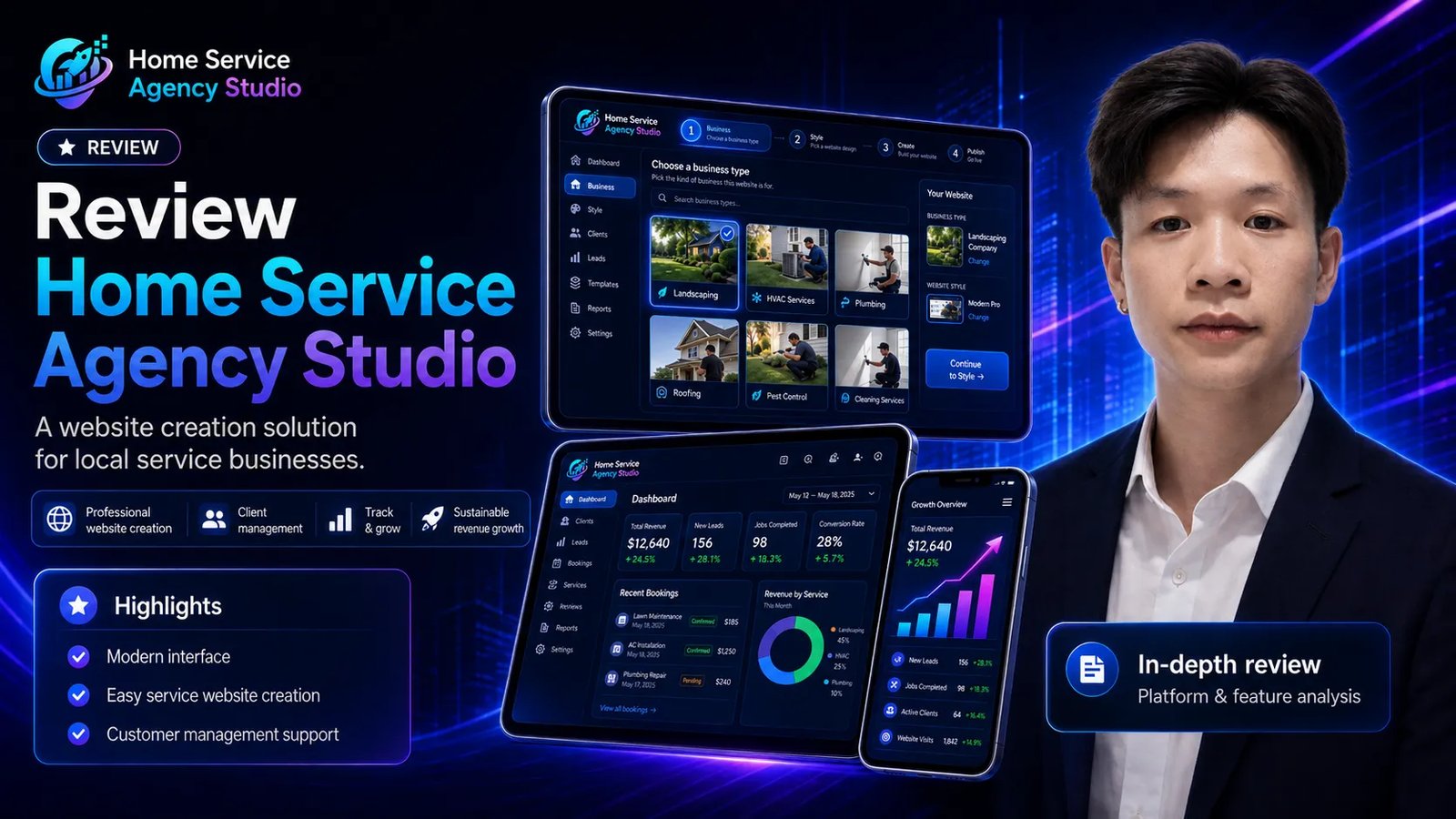
Every website tool involves operational trade-offs, and this studio is built specifically for local home trades rather than general web design.
Choosing this system means you trade infinite custom coding flexibility for rapid, error-free assembly. If a client demands complex custom web applications, membership portals, or multi-vendor eCommerce architectures, a pre-structured trade studio won’t fit those requirements. The framework is strictly optimized for local service businesses that need clear navigation, service lists, phone numbers, and estimate request forms.
Using pre-written trade content packs also means other agencies using the system have access to the same starting text. While the copy is industry-accurate, you still need to review local regulations, regional licensing requirements, and unique company policies. For example, trade licensing requirements vary dramatically across states, as documented by official regulatory standards like the U.S. Small Business Administration guide on state licenses. Relying entirely on pre-built copy without adding a client’s specific license numbers or local guarantees risks delivering a site that lacks local compliance.
Tip: Always check a contractor’s local licensing guidelines and insert their verified registration numbers into the header or footer before sending a final demo.
Niche Pack and Style Combinations
The platform allows flexible pairing between visual frameworks and trade packs.
| :— | :— | :— | :— | | Pest Control Services | Residential treatment, prevention, inspections | Problem-identifier lists, plan comparison tables | Immediate inspection requests | | Home Remodeling | Kitchens, bathrooms, structural expansions | Project gallery grids, consultation booking forms | In-home consultation bookings | | Cleaning & Maid Care | Deep cleans, recurring maid service, move-outs | Service checklists, frequency selection blocks | Online booking & flat-rate quotes | | Handyman Repairs | Odd jobs, fixture installs, routine maintenance | Multi-service checklists, quick contact bars | Direct job inquiries & phone calls |
Is It Safe to Rely on Pre-Built Agency Kits?
Yes, relying on specialized website kits is completely safe and standard practice among modern web agencies, provided you handle branding details correctly. The underlying code runs on standard WordPress environments, ensuring compatibility with common hosting servers, database architectures, and regular security updates.
The primary operational risk comes from sloppy personalization. If you send a demo to an electrical contractor that still shows placeholder text for plumbing, you lose trust immediately. The built-in guided personalization tool minimizes this human error by grouping vital business fields into a central setup screen, ensuring that site-wide details update in unison.
Furthermore, pre-built setups help prevent coding mistakes that frequently break custom-coded WordPress themes. Because these design systems and content packs are pre-tested inside the studio environment, you avoid layout shifts, broken contact scripts, and responsiveness bugs across mobile displays.
Who Is This Studio For (and Who Should Skip It)?
Different agency models have distinct technical needs. Evaluating your client base helps determine if this software fits your daily workflow.
Who It Suits: A Home Service Agency Studio Review
- Independent freelancers wanting to sell websites to neighborhood contractors without spending days writing copy or testing code.
- New agency founders needing a structured, repeatable client acquisition strategy using live, working demos instead of theoretical pitch decks.
- General web consultants looking to expand into home service verticals like HVAC, plumbing, and roofing without hiring dedicated copywriters.
- Technical creators seeking to cut down production time by deploying pre-assembled, reliable WordPress frameworks.
Who Should Skip It
- Developers seeking custom web applications, such as SaaS dashboards, custom customer portals, or membership hubs.
- Large eCommerce agencies focused on complex product catalogs, inventory synchronizations, and advanced checkout flows.
- Agencies targeting non-service industries, such as restaurants, clothing boutiques, enterprise software firms, or medical practices.
What to Confirm Before You Buy
Before purchasing, take time to check several technical details to ensure the product matches your current hosting environment and commercial plans.
First, check your existing WordPress hosting limits. Since this tool operates directly inside WordPress, you’ll need a reliable web host that supports regular plugin installations and standard site configurations. Confirm whether you plan to build prototypes on a staging domain, a local development environment, or individual client accounts.
Second, review your target service trades. The studio comes equipped with 10 specific trade packs. If your business focuses entirely on home trades outside those covered niches, verify how easily you can adapt the included layouts and text fields to your specific local market.
Finally, decide how you’ll handle client hosting and domain management. The studio includes a commercial client delivery feature, but you need an established process for pointing domains, configuring client email addresses, and handing over WordPress administrative logins once the deal closes.
Frequently Asked Questions
Can I change the color schemes on the pre-built styles?
Yes, you can customize the color palettes to match a client’s existing branding. The guided personalization engine allows you to adjust primary brand colors and typography accents across the design systems, ensuring the site matches the contractor’s existing vehicle wraps, logos, and promotional gear.
Do I need to know PHP or CSS to build sites?
No, the entire system is built to eliminate coding headaches completely. You manage the layout selections, trade content packs, business details, and client delivery steps entirely through visual setup screens and the guided onboarding wizard without ever touching raw website source code.
Does the studio work on multisite WordPress installations?
The documentation specifies standard WordPress setups through its guided onboarding plugin. If you plan to run an advanced WordPress multisite network, check the developer’s technical guidelines first, as automated studio onboarding sequences are typically configured for standard, standalone WordPress site environments.
Can I edit the pre-written trade copy?
Yes, all text included in the 10 niche packs remains fully editable. While the pre-written copy gives you a functional, industry-accurate starting point, you can adjust specific service descriptions, add local guarantees, change pricing terms, or insert the contractor’s real state license numbers.
What happens when I finish a project for a client?
You use the commercial client delivery feature to complete the build. This process prepares the site for live handover, allowing you to transition the concept demo into an active, independent business website that the contractor can use for daily customer acquisition.
Final Thoughts
If you plan to sell websites to neighborhood contractors, Home Service Agency Studio offers a practical, structured framework that simplifies visual design, industry copy, and client pitches. Review the 10 included trade niches against your local market, verify your hosting setup, and deploy your first personalized trade demo.