Disclosure: this article contains an affiliate link. If you buy through it, we may earn a commission.
Short Story Engine is a publishing tool created to turn an existing book, story world, or idea into standalone short stories that attract new readers. Instead of focusing only on drafting a main manuscript, it creates shorter fiction pieces designed to build discovery channels that guide audiences back toward your larger catalog.
What Short Story Engine Does for Book Discovery
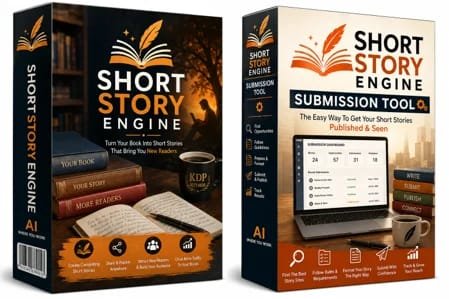
Short Story Engine generates standalone fiction from your core material to build discovery paths toward your books. Many writers find that publishing a single novel leaves them with very few ways to attract daily organic traffic. By breaking down story elements into separate pieces, you create multiple entry points across various digital storefronts.
Writing a full-length book takes months of dedicated labor, yet marketing that book requires an entirely different set of daily actions. When you produce shorter pieces that share the same universe, characters, or themes, you give casual browsers an easy way to sample your style. Each short narrative acts like a direct road leading back to your primary catalog.
This approach addresses reader discovery at its root cause. Novel readers often hesitate to spend money or several hours of their time on an unknown creator without seeing how they handle pacing and dialogue. Offering standalone shorter works removes that initial hesitation, letting unfamiliar readers experience your fiction without committing to a full four-hundred-page volume upfront.
If an author already maintains a finished title, they can pull character backgrounds, subplots, or lore out of their main text to build these spin-offs. If an author hasn’t written their main manuscript yet, they can draft these short narratives first to build an engaged following before the primary project arrives on digital shelves.
What Is the Core Problem with Most Publishing Tools?
Most publishing tools only help you write, format, or upload a primary manuscript, leaving you completely stranded once the file goes live on an online retailer. They guide creators through outlining, writing chapters, formatting interior margins, and designing book covers for digital stores like Kindle Direct Publishing.
That initial assistance helps authors reach the finish line, but completing the manuscript is merely step one of running an author business. Once your book exists on a crowded marketplace, thousands of other releases compete directly for the exact same pair of eyes every single afternoon. Having a clean cover file or an error-free interior layout does nothing to bring curious shoppers onto your product detail page.
To protect consumer trust across large retail platforms, government agencies such as the Federal Trade Commission consumer guidance outline standards that require commercial claims to remain honest and transparent. Genuine book marketing depends on providing authentic reading samples rather than aggressive sales talk. Short stories solve this traffic bottleneck naturally because each standalone release functions as an ongoing sample that directs attention back to your parent titles.
Key Features and Real-World Functions
Short Story Engine focuses its toolset on turning core ideas and existing manuscripts into promotional short fiction assets. Below is an overview of how its capabilities map to daily publishing tasks.
| Feature Area | Core Function | Practical Application for Authors |
|---|---|---|
| Book Repurposing | Extracts subplots and character arcs | Builds spin-off reads from completed manuscripts |
| World Exploration | Expands minor lore and background settings | Generates supplementary fiction for world-building fans |
| Concept Drafting | Turns rough ideas into short narratives | Tests genre premises before writing full-length novels |
| Audience Onboarding | Creates introductory standalone fiction | Provides easy reader entry points across online stores |
| Catalog Linking | Points short story endings to primary titles | Funnels active readers directly toward main books |
Repurposing Existing Books into Standalone Fiction
The first primary feature turns an existing novel or nonfiction volume into multiple self-contained short stories. Instead of leaving finished manuscripts locked inside a single file, you can pull side characters or background events into their own spotlights.
In daily use, this means an author doesn’t have to invent completely new plots whenever they need fresh material for their audience. You take a compelling scene, an untold backstory, or a secondary conflict mentioned in chapter four, and develop it into a complete narrative arc with a proper beginning, middle, and conclusion.
Because these stories stand on their own feet, someone who has never heard of your novel can read them without feeling confused. Once they reach the final sentence and enjoy the experience, they naturally want to explore the larger book where those characters originated.
Developing Story Worlds and Lore
The second feature focuses on extracting world-building elements to produce immersive short fiction. Authors who write fantasy, science fiction, historical drama, or paranormal romance often spend weeks inventing detailed lore, cultural backgrounds, and setting histories that never make it into their primary novels.
Rather than letting that background work sit hidden in your personal notes, you can shape those world elements into short adventures. A brief tale about a historical battle, a magic guild initiation, or a distant space station lets you show off your setting’s depth.
Starting from Scratch with New Ideas
The third feature helps writers who haven’t written a full book yet take raw concepts and turn them into finished short stories immediately. Staring at an empty document with the goal of producing eighty thousand words paralyzes many beginners before they even begin chapter one.
Working through shorter projects allows you to practice pacing, dialogue, and character development on a manageable scale. You can outline an idea, generate the story, and study how the plot pieces fit together without spending six months trapped inside an unmanageable draft.
This workflow lets you release completed fiction quickly, helping you understand what readers in your chosen genre respond to before committing years to an enormous epic. You build real writing momentum while establishing the foundation of your future audience.
Building Reader Funnels Toward Your Catalog
The fourth feature centers on repurposing short fiction to create direct paths toward your full-length catalog. Generating stories without a clear marketing purpose leaves you with disconnected manuscripts that do little to support your publishing goals.
By publishing these promotional pieces across multiple platforms, you cast a wider net across digital book markets. Each standalone release stays online permanently, gathering page views and sending interested buyers toward your primary store listings day after day.
How Short Stories Solve the Post-Publishing Discovery Struggle
Publishing a book without an established audience usually leads to silence because online retailer algorithms prioritize titles that already maintain consistent sales records. When you release a single standalone book, your marketing reach is limited to one product detail page, one title keyword search, and one cover image.
Short stories solve this discovery challenge by multiplying the number of digital doorways leading back to your author brand. When an author publishes five short stories alongside one novel, they expand their online footprint to six distinct product listings, each capturing different search terms and browsing categories.
Can Short Stories Really Bring Long-Term Book Sales?

Short stories consistently drive backlist book sales when they’re designed to connect directly with your primary titles. When an author uses short pieces as sample pathways, they give their audience a risk-free taste of their prose, pacing, and character development.
This strategy works because modern book buyers rely heavily on personal reading samples before investing money into extensive novel series. Short, accessible texts provide approachable reading experiences that encourage casual consumers to read more frequently.
Tip: Always place a direct link to your primary book on the final page of your short story, so engaged readers can purchase the next installment immediately after finishing the final sentence.
Comparing Book Creation Approaches
Comparing traditional full-length book creation to a short-story discovery model helps writers decide where to invest their promotional energy.
| Publishing Metric | Traditional Novel-Only Model | Short Story Discovery Model |
|---|---|---|
| Time to Market | Several months to a year per title | Days to a few weeks per short piece |
| Discovery Points | Single product page per project | Multiple listings across retail stores |
| Reader Entry Barrier | High financial and time commitment | Low friction, quick reading experience |
| Catalog Cross-Promotion | Restricted to back-matter inside one book | Continuous web of cross-linked narratives |
| Idea Validation Speed | Slow, requires completing full manuscripts | Fast, tests concepts with immediate releases |
How to Set Up a Reader Discovery System with Short Stories
Creating an automated flow of readers requires linking your short stories directly to your primary books so browsing consumers transition naturally from free or low-cost samples into paying backlist buyers.
- Select a focused core element from your manuscript. Choose an interesting secondary character, a historic world event, or an unresolved subplot from your main book to serve as the narrative foundation for your new piece.
- Draft a self-contained narrative arc. Write the story with a clear introductory hook, rising tension, and an emotionally satisfying resolution so the piece functions perfectly as an independent reading experience.
- Format the back-matter with an explicit invitation. Add a brief author note immediately following the story’s final line, explaining that the characters or world continue inside your full-length novel.
- Distribute the standalone story across digital platforms. Upload the short narrative to digital storefronts, your personal website, or author newsletter lists where prospective fans frequently look for fresh fiction samples.
- Track storefront clicks back to your primary book listing. Monitor your retail links to see which short stories attract the highest percentage of clicks toward your main catalog, adjusting your story descriptions to improve your conversion rates.
What Authors Often Get Wrong with Short Fiction

Writers frequently make fundamental mistakes when using short fiction for book promotion, causing their releases to fall flat despite putting in considerable creative effort.
Leaving the Ending on an Unresolved Cliffhanger
Writers often treat promotional short stories like unfinished novel chapters, cutting the narrative off right before the climax to force readers into buying their novel. This tactic backfires because modern book consumers expect a complete emotional journey whenever they open a standalone title.
When you deny readers a genuine ending, they feel cheated rather than curious. Instead of purchasing your main novel, they walk away with a negative impression of your storytelling ethics and actively avoid your catalog in the future.
Your short story must deliver a complete story arc that resolves its central conflict while hinting at larger events unfolding elsewhere. Satisfied readers naturally seek out your full-length work because they enjoyed the experience, not because they were tricked into an artificial cliffhanger.
Writing Stories Disconnected from Their Main Books
Authors sometimes generate short stories in genres completely unrelated to their primary books, releasing a horror short to promote a contemporary romance novel or a gritty sci-fi story to promote a cozy mystery.
While experimenting with different genres can be creative, it destroys your marketing funnel. Someone who enjoys your standalone space western will have zero interest in picking up your historical romance series once they finish your sample.
Every promotional short story you publish must match the exact tone, heat level, age category, and genre conventions of your primary catalog. Maintaining strict thematic alignment guarantees that readers who love your short fiction will appreciate your full-length novels just as much.
Forgetting to Include Direct Catalog Links
Writers regularly publish short stories without placing promotional links in their back-matter, assuming readers will take the initiative to search online stores for their author name manually.
Ensure every piece of short fiction ends with clear cover art, a brief blurb, and a clickable link pointing directly to your primary book. Making the next step completely effortless maximizes the percentage of readers who move straight into your paid catalog.
Who Is Short Story Engine Built For?
Short Story Engine suits specific types of authors based on their current production goals, publishing status, and marketing plans.
Authors with Finished Manuscripts
This system is ideal for self-published writers who already have one or more full-length books live on digital stores but struggle to generate steady daily sales. If you have already put in the hard work to write, format, and publish a novel, your primary challenge is getting prospective buyers to notice your product detail page.
New Writers Planning Future Releases
The tool also serves aspiring novelists who haven’t completed their main books yet but want to start building an audience before their primary launch date arrives. Sitting down to write an eighty-thousand-word epic without an existing following often leads to disappointing release weeks, as nobody is waiting to buy the finished file.
By generating shorter pieces within your planned story universe, you can publish standalone fiction, test audience reactions, and gather early readers ahead of time. When your major novel finally launches, you’ll already have a small group of engaged fans familiar with your universe and ready to leave reviews.
Fiction Writers Expanding World-Building Lore
Creators working within heavy world-building genres like epic fantasy, urban paranormal, space opera, and alternate history benefit significantly from this approach. These writers routinely generate massive amounts of lore, faction histories, and world timelines that simply can’t fit inside their main manuscripts without bogging down the story’s pacing.
Instead of letting that creative effort go to waste in personal notebook files, you can translate those detailed setting notes into exciting promotional narratives. Readers who love detailed worlds can consume these standalone tales, getting hooked on your lore before purchasing your main book series.
Who Should Not Buy Short Story Engine?
This tool isn’t suitable for writers who have no interest in writing, releasing, or marketing short fiction as part of their business model. If your publishing strategy relies entirely on purchasing expensive paid advertising, using direct mail campaigns, or releasing eight-hundred-page standalone epics with no supplementary materials, you’ll find little value in this workflow.
It’s also not intended for creators looking for a single-click publishing replacement that completely eliminates personal creative input. Generating stories that attract genuine human readers still requires you to evaluate narrative flow, review character voices, and ensure the resulting fiction matches your standards.
Writers who produce purely technical nonfiction, academic papers, legal guides, or corporate documentation will also find the tool mismatched with their needs. The system is designed around narrative fiction, story worlds, character development, and narrative reader funnels, making it unhelpful for strictly informational reference publishing.
What Buyers Should Check Before Purchasing
Before purchasing access to Short Story Engine, you should evaluate several practical aspects of your own author business to ensure the product aligns with your immediate goals.
First, clarify how short fiction fits into your current catalog strategy. Decide whether you plan to release these standalone stories on commercial retail platforms, host them directly on your author website, or use them as reader magnets to grow your private newsletter community. Knowing your distribution method beforehand prevents your generated stories from sitting unused on your hard drive.
Second, check your available time for editing and refining generated fiction. While the tool streamlines the process of structuring story concepts and building drafts from your materials, you still need to review the text to verify that the tone, character personalities, and dialogue match your voice.
Third, confirm which of your existing projects provides the strongest foundation for spin-off material. Authors with an existing novel or an extensive world bible will experience a smoother setup process than those starting with only a vague, one-sentence idea. Review your creative assets to determine which book, world, or concept you want to process first.
Frequently Asked Questions
Can I use Short Story Engine if I haven’t written a book yet?
Yes, you can use the tool to turn standalone story ideas and concepts into finished short fiction. This allows aspiring authors to publish shorter pieces and build an active reader base before their full-length novel is completed.
Does the software work for authors who already have published novels?
Yes, the platform is specifically designed to extract side characters, subplots, and world lore from existing manuscripts. It turns those elements into standalone companion stories that function as promotional pathways leading back to your established book catalog.
Are the generated short stories completely standalone?
Yes, the stories are structured as independent narratives with complete arcs, allowing readers to enjoy them without prior knowledge of your books. Once readers finish the story, they’re invited to explore the main novel where those characters originated.
Do I need technical computer skills to use this tool?
No specialized technical knowledge is required to run the software. The tool focuses on organizing story concepts, character information, and world lore through a straightforward interface designed specifically for working fiction authors and independent publishers.
Can this tool replace the need for an author to edit their stories?
No, the tool doesn’t eliminate the need for human creative oversight. Authors should always read through their generated stories to adjust pacing, refine character voices, and ensure the narrative aligns with their established writing style.
How does publishing short stories help my novel sales?
Publishing short stories increases the number of digital listings connected to your name across book marketplaces. Readers discover your work, enjoy the storytelling, and click the back-matter links to purchase your full-length novels. This strategy builds a wider audience by providing accessible entry points into your writing.
Final Thoughts
You don’t have to keep writing in the dark, hoping a new reader finds your work by accident. Pick one character or setting from your current project today and draft a brief, punchy tale. It’s a simple way to expand your reach, and you’ll be surprised how quickly your audience grows.