Have you ever wondered what a domain really means when it comes to websites? If you’re planning to create your own site or just curious about how the internet works, understanding the meaning of a domain is key.
Your domain is more than just a web address; it’s your online identity and the gateway people use to find you. You’ll discover exactly what a domain is, why it matters to your website, and how it shapes your presence on the internet.
Keep reading, and you’ll soon see how mastering this simple concept can make a big difference for your online success.
Domain In Everyday Life
The word “domain” appears in many parts of daily life. It describes areas where someone or something has control, knowledge, or presence. Understanding these common uses helps us grasp the idea behind a website domain.
Domains are not just web addresses. They show up in science, nature, math, and even in how we describe spaces around us. Each use shares a core meaning: a defined space or range related to a person, group, or subject.
Area Of Control
A domain can mean a place or area someone controls. Kings had kingdoms as their domains. A person’s room or garden can be their personal domain. It shows ownership or authority over a space.
Field Of Knowledge
People use domain to describe their area of expertise. Scientists have domains like physics or biology. Writers might work in the domain of literature. It means the specific subject someone knows well.
Physical Region
Domain also refers to real-world places or regions. Forests, lakes, or cities can be called domains. These are distinct areas with clear boundaries. It helps to locate or describe physical spaces.
Biological Classification
In biology, domain is the highest classification rank. Living things belong to one of three domains: Archaea, Bacteria, or Eukarya. This categorizes life forms based on core features.
Mathematical Use
Mathematically, domain means the set of input values for a function. It defines what numbers or values a function can accept. This use shows domain as a range or limit in math.
Credit: www.examples.com
Domain In Computing
The term “domain” in computing refers to a distinct area within computer networks or the internet. It helps identify and organize computers, websites, and online resources. Domains make it easier to locate and manage digital content and devices. Understanding domains is important for anyone using the internet or working with computer systems.
Domain Name Basics
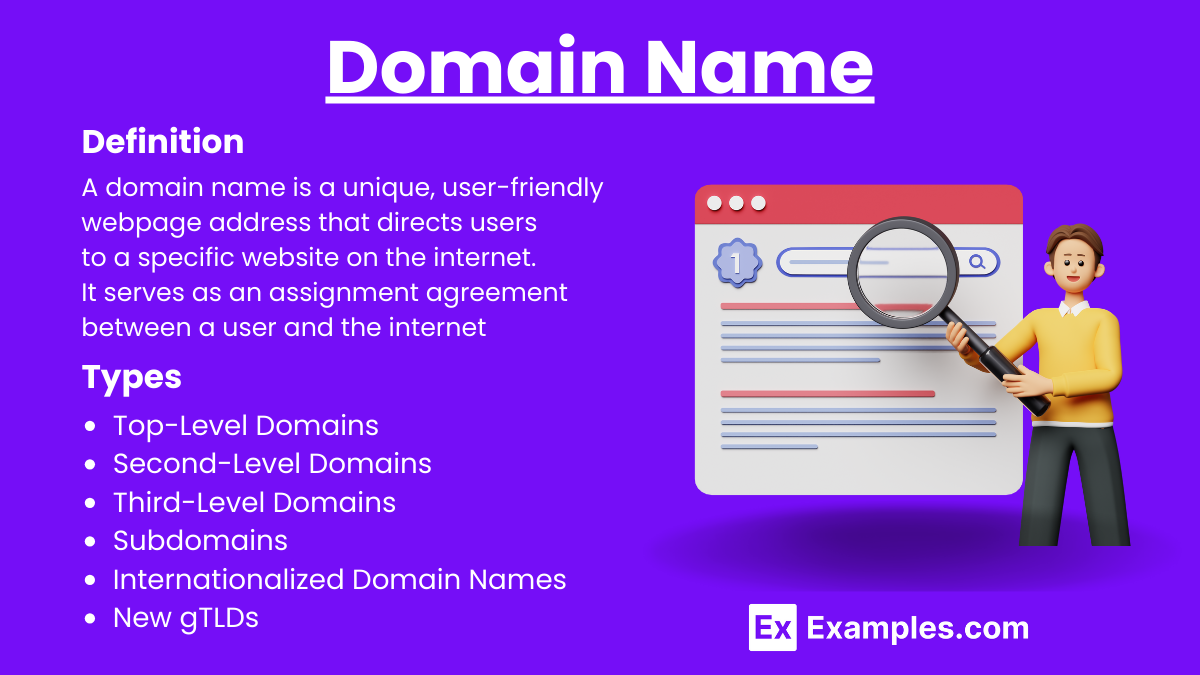
A domain name is the address of a website on the internet. It is what you type into a browser to visit a site, like example.com. Domain names use letters and numbers, making internet addresses easy to remember. They replace hard-to-remember IP addresses, which are numerical codes assigned to devices online.
Network Domains
Network domains group computers and devices under one administration. This helps manage user access, security, and resources within a network. For example, a company may have a network domain to control all computers and users inside its offices. Network domains improve organization and protect sensitive information.
Top-level Domains
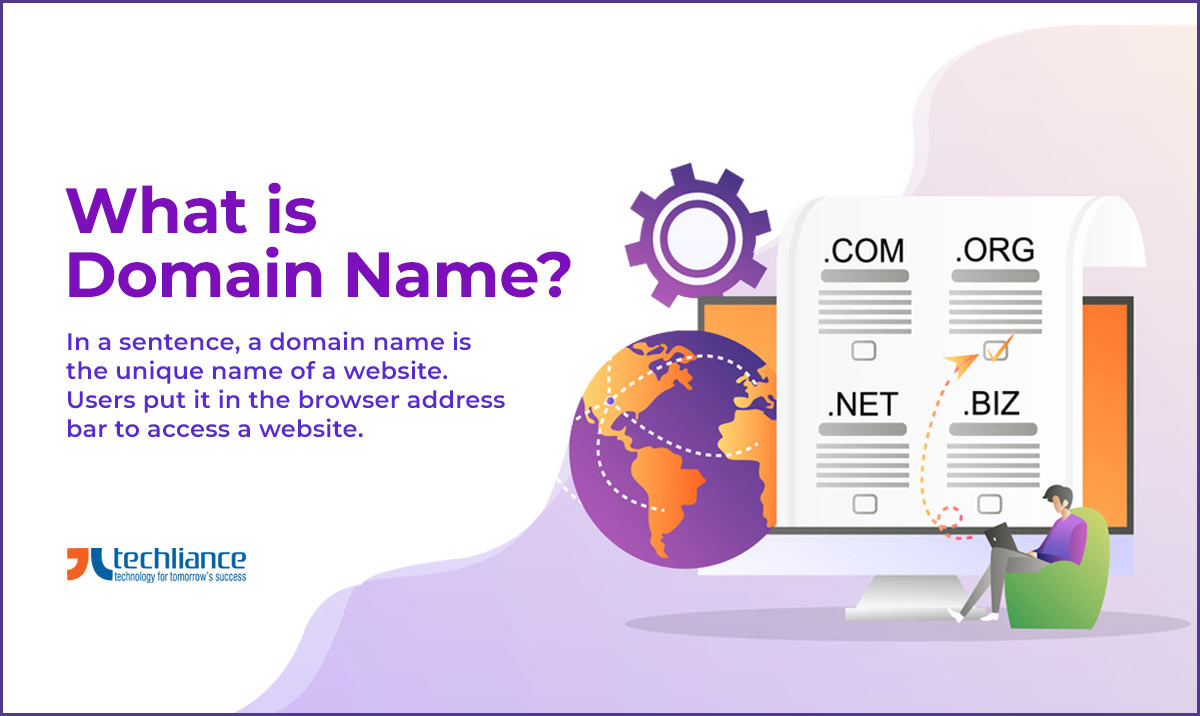
Top-Level Domains (TLDs) are the last part of a domain name. They appear after the dot, such as .com, .org, or .edu. TLDs classify websites by type or country. For instance, .com is for commercial sites, while .gov is for government pages. Choosing the right TLD helps people understand a website’s purpose.
How Domains Work
Understanding how domains work helps you grasp how websites appear online. Domains act like addresses, guiding visitors to the right place on the internet. Behind the scenes, several processes make this possible. These include registering a domain, translating it through DNS, and knowing how it differs from a URL. Each step plays a key role in website access.
Domain Registration
Domain registration is the first step to owning a website address. You choose a unique name and register it through a domain registrar. This process reserves the domain for your use. Registrars manage the record of who owns each domain. Registration usually lasts one year and can be renewed. Without registration, no one can claim that domain.
Dns And Website Access
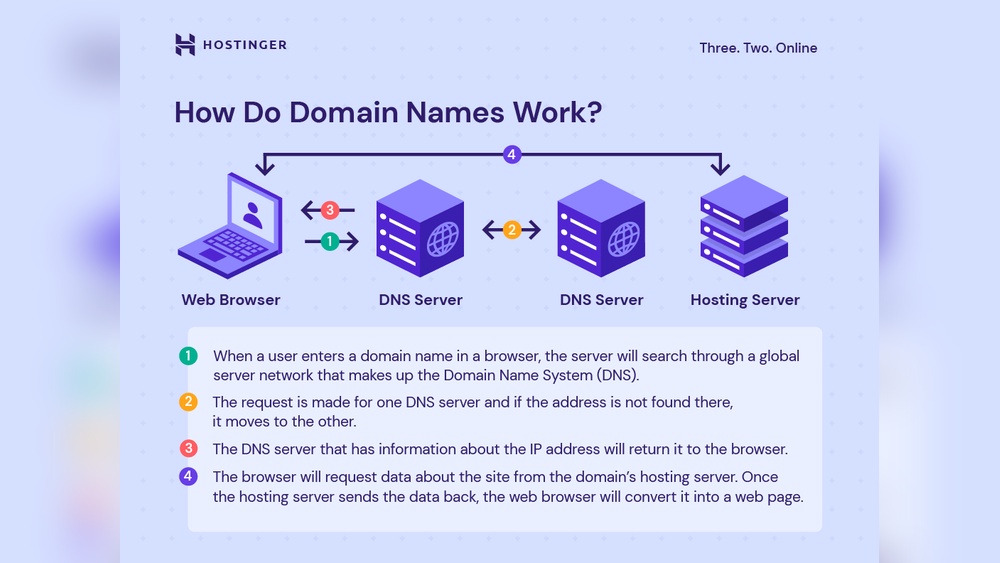
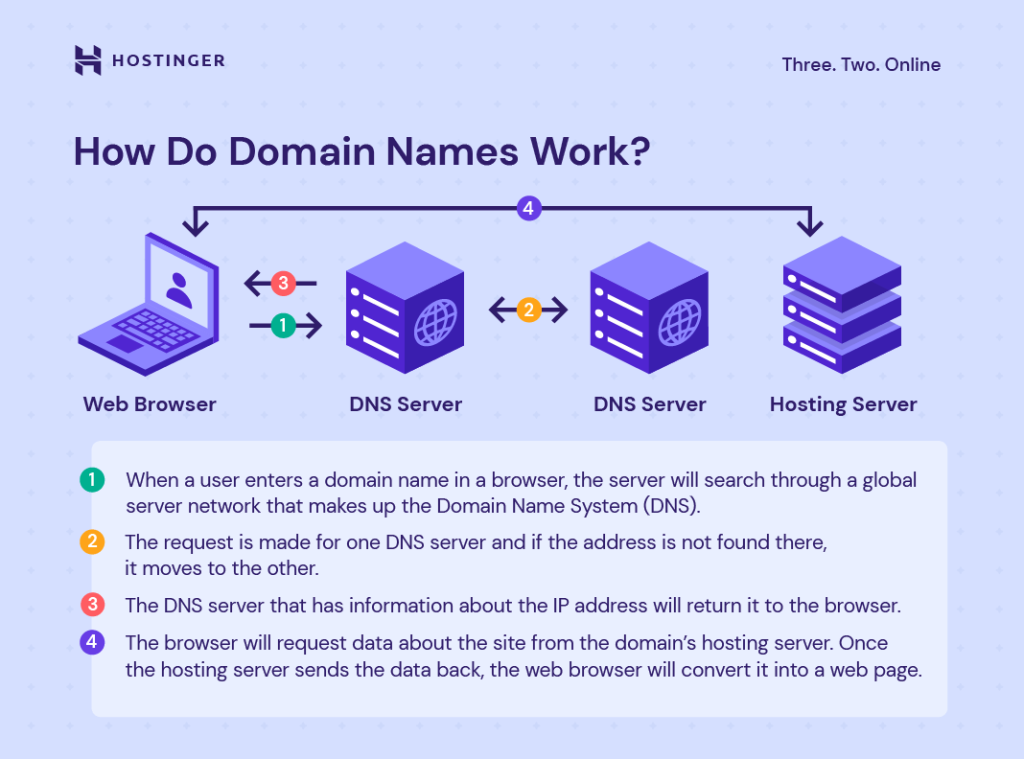
The Domain Name System (DNS) connects domain names to IP addresses. When you type a domain into your browser, DNS finds the website’s server IP. This system works like a phone book for the internet. It translates easy domain names into numbers computers understand. Without DNS, you would need to remember complex IP addresses.
Domain Vs Url
A domain is the main part of a website address. It usually looks like example.com. A URL includes the domain plus extra details. These details can be the protocol (http or https), subdomains, and page paths. For example, https://www.example.com/about is a URL. The domain is just example.com. URLs point to specific pages, while domains point to the whole website.
Credit: www.hostinger.com
Choosing A Domain Name
Choosing a domain name is a key step in building your website. It shapes your online identity and affects how people find you. A clear, simple domain name helps visitors remember your site. It also sets the tone for your brand and business.
Picking the right domain involves more than just creativity. You must think about your audience, your goals, and the technical side of things. This section guides you through important points to consider for a strong domain name.
Tips For Selection
Keep your domain short and easy to spell. Avoid numbers and hyphens as they confuse users. Use keywords that show what your site is about. Make it unique to stand out from competitors. Check domain availability and trademarks before deciding. Choose a name that can grow with your business.
Importance Of Tlds
TLD means top-level domain, like .com, .net, or .org. It appears at the end of your domain name. .com is the most popular and trusted by users. .org suits non-profits and organizations. Country-specific TLDs, like .us or .uk, work well for local businesses. Pick a TLD that fits your site’s purpose and target audience.
Using Subdomains
Subdomains create separate sections within your website. For example, blog.yoursite.com or shop.yoursite.com. They help organize content and improve navigation. Subdomains can target different languages or products. Use them to enhance user experience without buying new domains. Keep subdomains clear and relevant to their content.
Domain Examples
Understanding domain examples helps clarify what a domain means for websites. Domains serve as the online address that directs visitors to a specific site. They come in various forms and serve different purposes. Below are some common types and examples of domains to give you a clear picture.
Popular Domain Names
Popular domain names include google.com, facebook.com, and amazon.com. These names are easy to remember and represent big brands. They often use the .com extension, which is the most common top-level domain (TLD). Other popular TLDs include .net and .org.
Domain Usage Cases
Domains are used for many purposes. Businesses create domains to build their online presence. Bloggers use domains to share stories and ideas. Non-profit organizations often use .org domains to show their mission. Schools and universities use .edu domains for their websites.
Industry-specific Domains
Some domains target specific industries. For example, .tech is popular for technology companies. The .travel domain suits travel agencies and bloggers. Health-related sites may use .health or .care. These industry-specific domains help visitors understand the website’s focus quickly.
Credit: blog.techliance.com
Frequently Asked Questions
What Is A Domain With An Example?
A domain is a unique internet address like google. com. It identifies a website’s location online clearly and simply.
What Does Domain Mean For A Website?
A domain is a website’s unique address on the internet, like example. com. It helps users find and access the site easily.
What Is A Website Domain Name Example?
A website domain name is the unique address of a site on the internet, like google. com or example. org. It helps users find websites easily.
How Do I Find The Domain For My Website?
Find your website’s domain by checking the registered name at your domain registrar or hosting provider’s dashboard. It appears as your site’s web address.
Conclusion
A domain is a simple way to find websites online. It acts like an address for your site. Choosing the right domain helps people remember your website easily. Domains also show what type of site it is, like. com or.
org. Understanding domains makes building a website clearer and easier. Everyone using the internet visits domains every day. Now you know why domains are important in the online world.